
Enterprise AI Measurement Guide
Reliability
Transient Alerts
How is the count of transient alerts trending in the Reliability tab, and how does it relate to Total Incidents and MTTA?
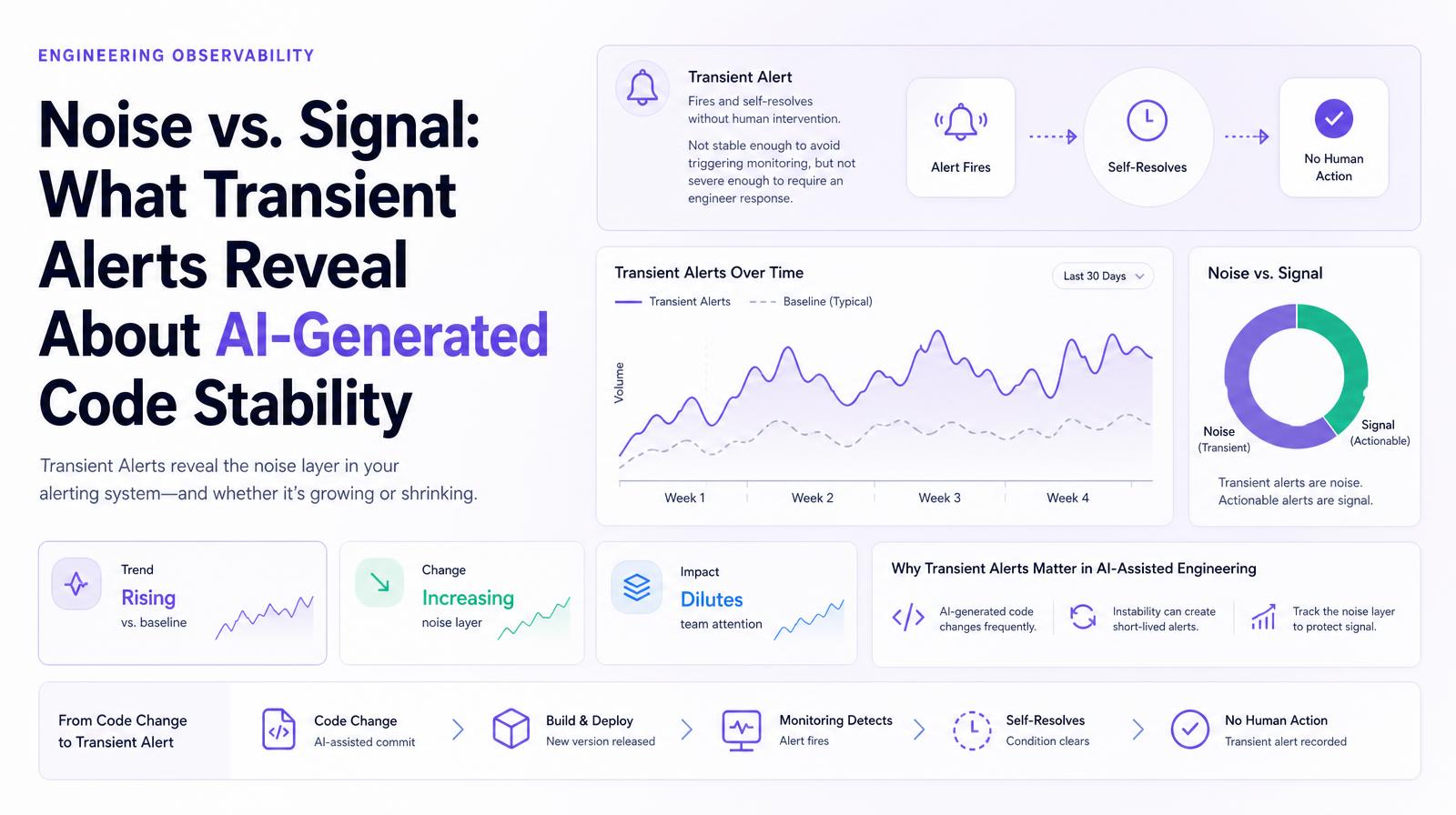
What it shows
Transient Alerts counts the number of alerts that fire and self-resolve without human intervention in the selected period, incidents that were not stable enough to avoid triggering monitoring but not severe enough to require an engineer response. The trend reveals whether this noise layer in the alerting system is growing or shrinking. In AI-assisted engineering environments, transient alerts often rise before more serious incidents do, making them a leading indicator of code stability issues that haven't yet escalated to P1s or MTTA events.
Why it matters
Transient alerts are the canary in the reliability coal mine. A rising transient alert count means the production environment is experiencing more instability, even if that instability is self-resolving, and engineers are conditioning themselves to ignore alerts because they resolve on their own. Alert fatigue from a high transient count directly degrades MTTA when a serious incident fires: engineers who have learned that most pages are noise take longer to acknowledge the ones that aren't. AI-generated code that introduces subtle instability patterns often surfaces first in the transient alert count before reaching incident or P1 severity.
The Larridin angle
Larridin tracks transient alert volume alongside total incident count and MTTA trend, making it possible to identify the pattern of rising transient alerts preceding deteriorating MTTA, which is the reliability degradation sequence that most organizations only recognize in retrospect. Catching it in the transient alert count is the intervention point that prevents escalation.
Related Reliability Metrics
Common questions
What are transient alerts in the context of AI-generated code?
Transient alerts are notifications that fire and resolve themselves without human intervention, indicating temporary instability in AI-generated code that hasn't escalated to more severe incidents.
Why should the C-suite be concerned about transient alerts?
A rising count of transient alerts signals growing instability in the production environment, which can lead to alert fatigue and slower response times to serious incidents, affecting overall reliability.
How do transient alerts relate to MTTA and incident response?
High transient alert volumes can lead to alert fatigue, causing engineers to delay acknowledging serious incidents, thereby increasing Mean Time to Acknowledge (MTTA) and impacting incident response effectiveness.
How does Larridin help manage transient alert trends?
Larridin tracks transient alert volumes alongside total incident counts and MTTA trends, allowing organizations to identify and address reliability issues before they escalate.