
Enterprise AI Measurement Guide
Browser Analytics
Top 5 AI Tools
Which five browser-based AI tools have the most active users, and how does that ranking compare to the unified ranking by daily active users?
What it shows
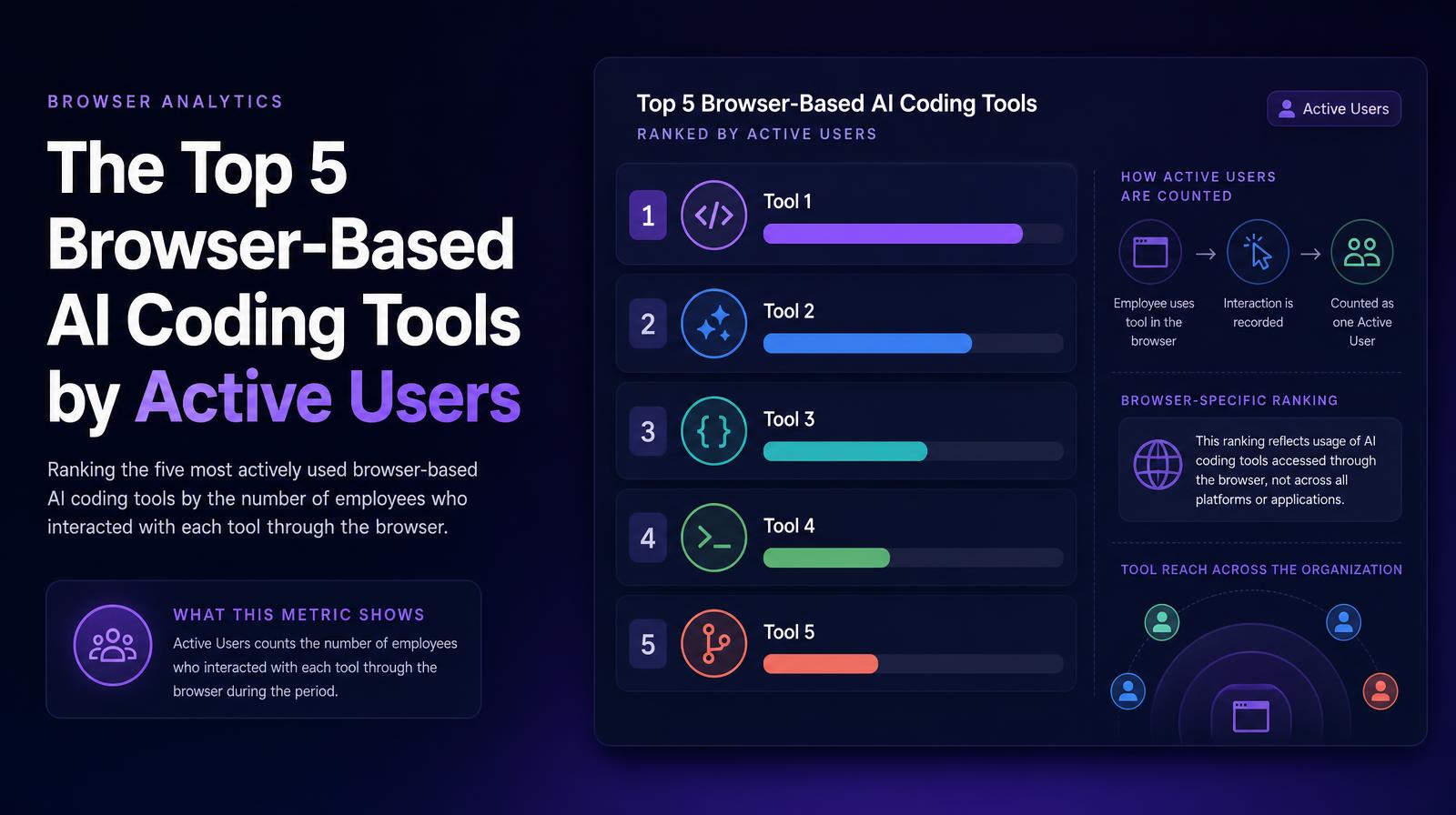
The Browser Analytics Top 5 AI Tools ranks the five most actively used browser-based AI tools by Active Users, the number of employees who interacted with each tool through the browser during the period. This is the browser-specific tool ranking, distinct from the Unified Analytics DAU-ranked top 5, and reflects which web-based AI tools have the broadest reach across the browser-using population.
Why it matters
The browser top-5 list is the enterprise's AI tool landscape as it exists today for the majority of employees who access AI through a browser. For organizations that haven't deployed desktop agents widely, this list is effectively the full AI tool portfolio. It surfaces which tools have achieved critical mass in browser adoption, and which approved tools have failed to gain traction despite being available, making it the starting point for browser-specific enablement decisions and vendor relationship reviews.
The Larridin angle
The browser top-5-by-active-users ranking sometimes differs meaningfully from the unified top-5-by-DAU ranking, because a tool with many occasional browser users can rank higher by active users than by DAU. When the two lists diverge, the difference reveals tools with broad but shallow browser engagement that need enablement investment to deepen, and tools with narrower but more consistent daily use that represent stronger ROI despite lower total user counts.
Related Browser Analytics Metrics
Common questions
What does the 'Active Users' metric indicate in the context of browser-based AI tools?
The 'Active Users' metric measures the number of employees who interacted with each AI tool through the browser during a specific period, reflecting the tool's reach among the browser-using population.
Why is the browser-specific AI tools ranking important for enterprises?
The ranking provides insight into which AI tools are widely adopted by employees accessing them through browsers, helping organizations make informed decisions about tool enablement and vendor relationships.
How does the browser-based AI tools ranking differ from the unified DAU ranking?
The browser-based ranking can differ from the unified DAU ranking because it accounts for tools with broad but less frequent usage, highlighting tools that may need more enablement investment.
What insights can the C-suite gain from the browser top-5 AI tools list?
The list helps the C-suite understand which AI tools have achieved significant adoption among employees, guiding decisions on tool deployment and identifying tools that may require additional support for broader engagement.