
Enterprise AI Measurement Guide
Browser Analytics
AI Adoption
What share of our workforce is using browser-based AI tools, and how does that rate compare to our desktop AI adoption?
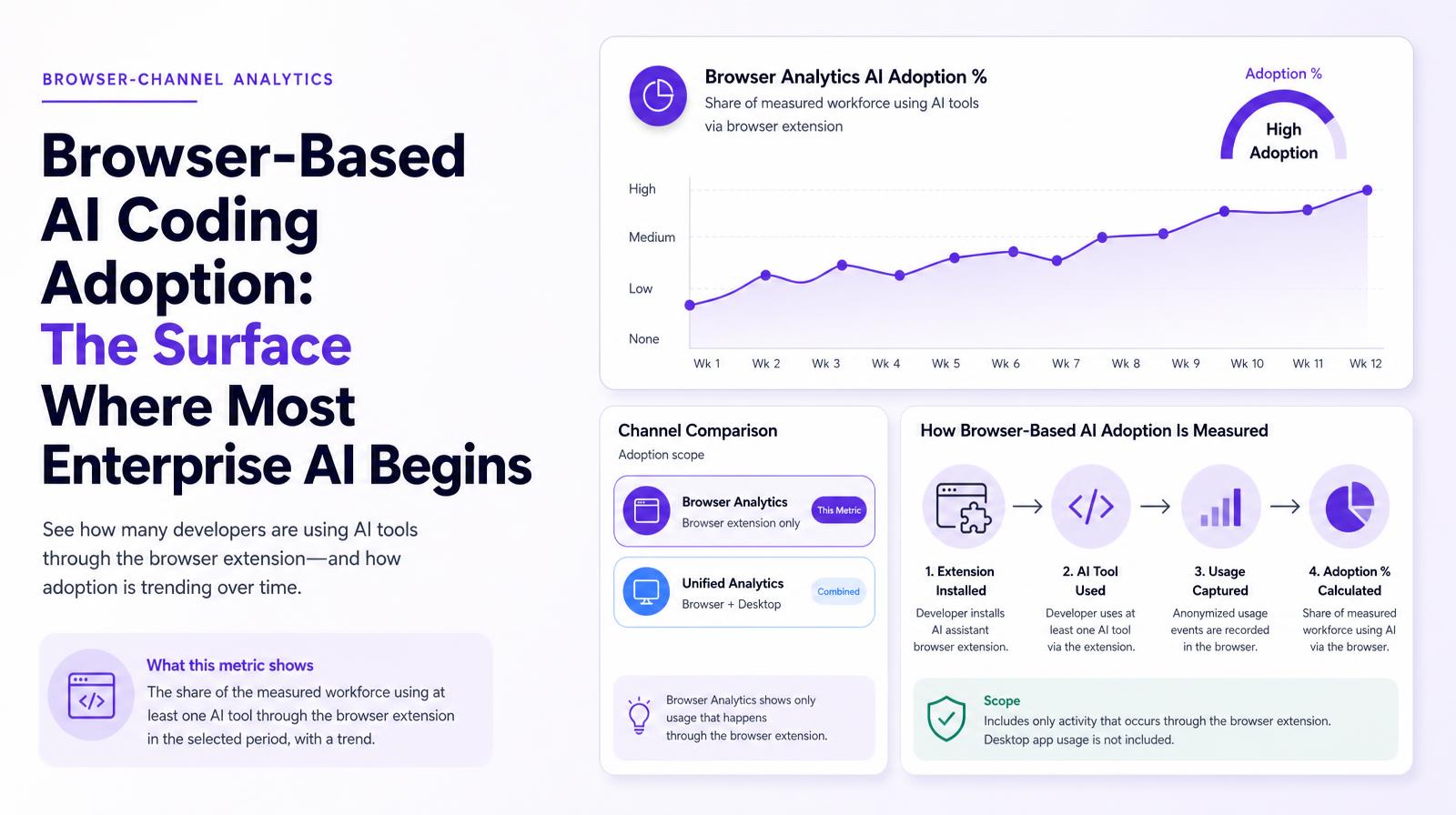
What it shows
The Browser Analytics AI Adoption % shows the share of the measured workforce using at least one AI tool through the browser extension in the selected period, with a trend. This is the browser-channel-specific adoption rate, distinct from the Unified Analytics adoption rate, which combines browser and desktop, and reflects the portion of AI tool usage that occurs through web-based AI tools accessed via the browser.
Why it matters
Browser-only adoption typically represents the broadest part of the AI tool portfolio because browser-based tools require no installation and have the lowest access barrier. For most enterprises, browser AI adoption is where AI use begins, employees accessing web-based AI tools before any desktop agent or IDE extension is deployed. Tracking browser adoption separately from unified adoption shows how much of the workforce's AI use remains at this initial, lowest-friction entry point versus progressing to the deeper desktop engagement that characterizes mature AI integration.
The Larridin angle
The browser-specific trend is particularly valuable when compared to the desktop adoption trend simultaneously. If browser adoption is flat while desktop adoption is rising, the organization's AI-mature employees are migrating to deeper tools, a sign of adoption progression. If browser adoption is rising while desktop is flat, the org is expanding breadth without deepening engagement, a different enablement problem requiring different intervention.
Related Browser Analytics Metrics
Common questions
What does the Browser Analytics AI Adoption % indicate?
It shows the share of the workforce using at least one AI tool through a browser extension during a selected period, highlighting web-based AI tool usage.
Why is browser-based AI adoption significant for enterprises?
Browser-based AI tools require no installation, making them the easiest entry point for employees to begin using AI, representing the broadest part of the AI tool portfolio.
How does tracking browser adoption separately benefit organizations?
It helps organizations understand how much of their workforce's AI use is at the initial entry point versus progressing to more integrated desktop tools, indicating the maturity of AI adoption.
What does a flat browser adoption trend with rising desktop adoption suggest?
It suggests that AI-mature employees are transitioning to deeper tools, indicating progression in AI adoption within the organization.