
Enterprise AI Measurement Guide
Workflow Intelligence
High-Friction Apps
How many applications are classified as high-friction in the Workflow Intelligence Overview tab?
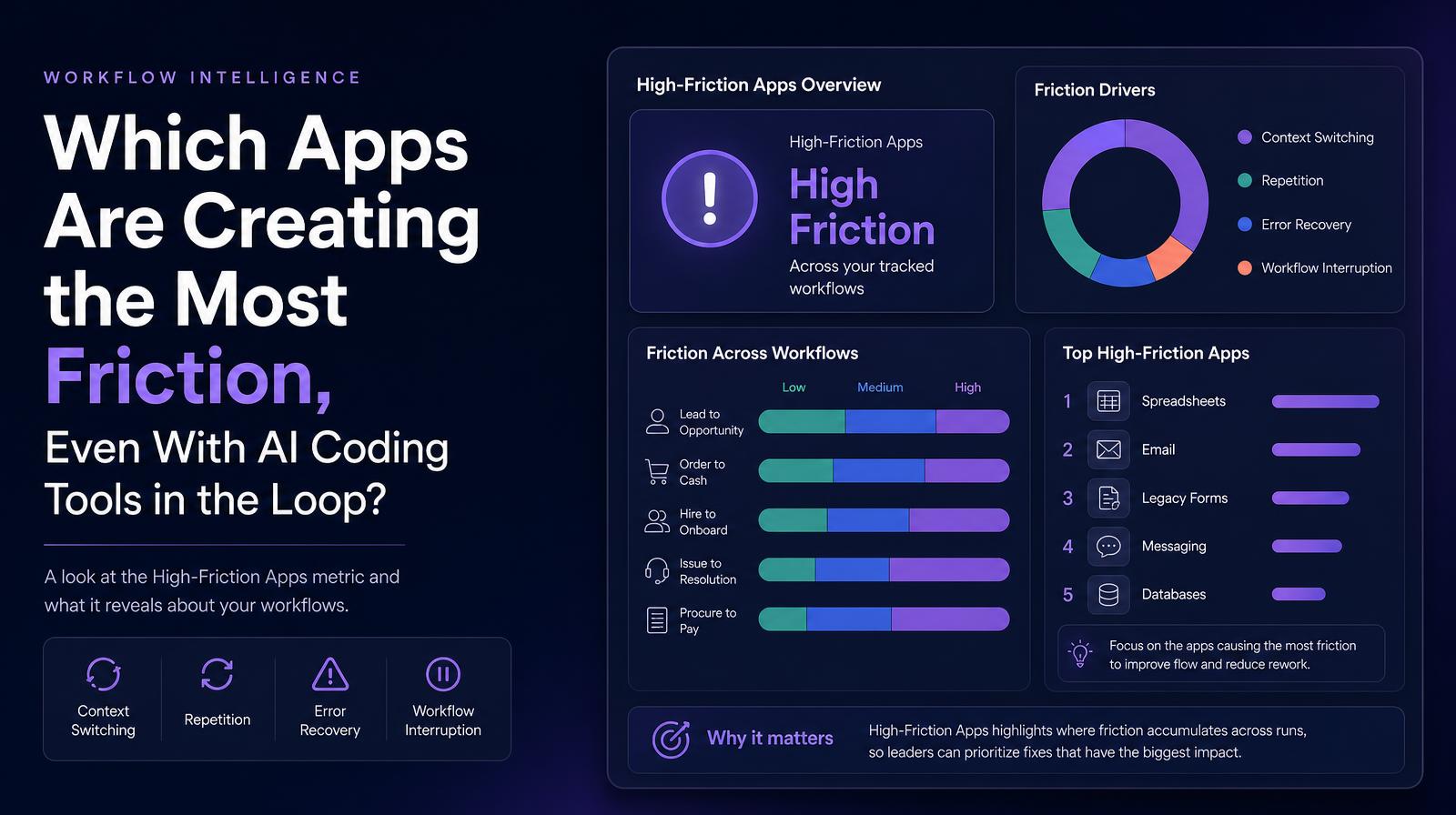
What it shows
High-Friction Apps counts the number of applications in the organization's tracked workflow environment that are classified as high-friction, meaning they are associated with elevated levels of context switching, repetition, error recovery, or workflow interruption across multiple workflow runs. This count gives leaders an immediate read on how many applications in the tech stack are contributing net negative friction to the workflows they're part of.
Why it matters
The High-Friction Apps count is the portfolio management signal in Workflow Intelligence. A single high-friction app embedded in dozens of workflows generates far more aggregate friction cost than multiple high-friction apps used rarely. The count surfaces the breadth of the problem; the Project Teams table and the detailed workflow view connect the count to specific workflows and quantified savings opportunities. For CIOs and COOs managing the enterprise application portfolio, high-friction app count is the first filter for rationalization decisions, the apps generating the most friction are the candidates for replacement, redesign, or AI augmentation.
The Larridin angle
Larridin's High-Friction Apps classification is derived from observed behavior across workflow runs, not from employee surveys about which tools feel frustrating. An app that employees consistently report liking but which generates high context switching and error recovery in practice shows up as high-friction in Larridin's data, a discrepancy that often reflects the gap between tool preference and tool effectiveness.
Related Workflow Intelligence Metrics
Common questions
What does the High-Friction Apps metric indicate?
The High-Friction Apps metric shows the number of applications in an organization's workflow that cause elevated levels of context switching, repetition, error recovery, or workflow interruptions.
Why is the High-Friction Apps count important for CIOs and COOs?
The count helps CIOs and COOs identify which applications are contributing the most friction, guiding decisions on app replacement, redesign, or AI augmentation to optimize the tech stack.
How does Larridin determine if an app is high-friction?
Larridin classifies high-friction apps based on observed behavior in workflow runs, rather than employee surveys, highlighting discrepancies between tool preference and effectiveness.
How can organizations use the High-Friction Apps count to improve workflows?
Organizations can use the count to identify apps that generate the most friction and explore opportunities for rationalization, replacement, or AI enhancement to streamline workflows.