
Enterprise AI Measurement Guide
Agent Readiness
Next Steps (Readiness Checks)
Which readiness checks are failing across the most repos, and what does each check represent in terms of agent deployment readiness?
What it shows
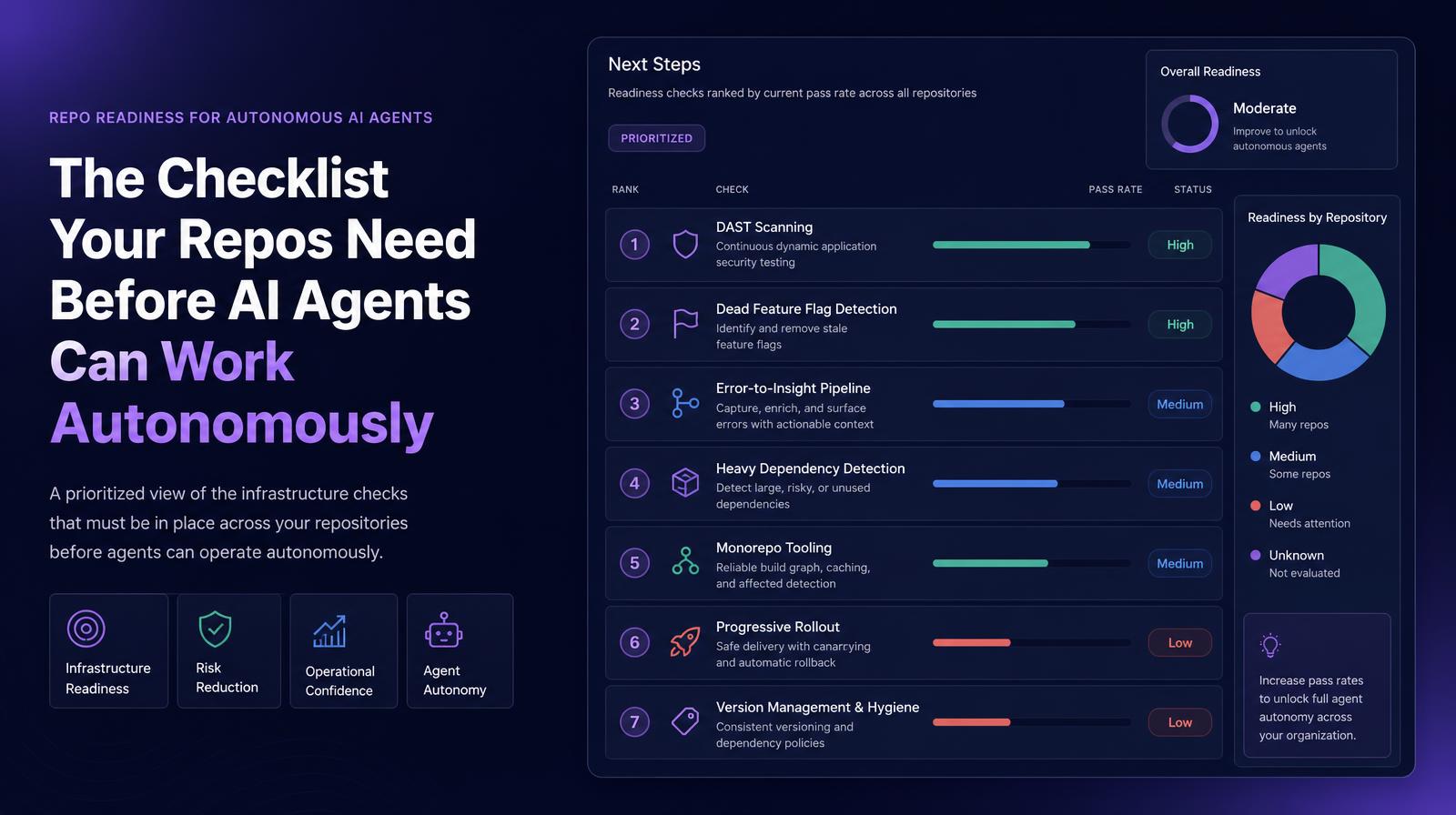
The Next Steps view shows a prioritized list of specific readiness checks ranked by their current pass rate across the org's repositories. Each check represents a concrete infrastructure requirement for autonomous agent operation, DAST Scanning, Dead Feature Flag Detection, Error-to-Insight Pipeline, Heavy Dependency Detection, Monorepo Tooling, Progressive Rollout, Version Drift Detection, and Privacy Compliance. Ranking by pass rate across repos identifies which checks the most repositories are failing, making them the highest-impact items to address first.
Why it matters
The Next Steps view converts the abstract readiness score into an actionable engineering backlog. A CTO who knows their repos are at Level 2 overall needs to know specifically that 80% of repos are failing the Error-to-Insight Pipeline check and 70% are failing DAST Scanning, because those two items, fixed, would move the org's readiness score more than any other investments. The pass-rate ranking does that prioritization automatically, making the agent readiness roadmap a data-driven output rather than an opinion.
The Larridin angle
Each of the eight readiness checks maps to a specific risk that AI agents create in production. Dead Feature Flag Detection prevents agents from generating code that references deprecated flags and creates silent failures. Progressive Rollout ensures agent-generated changes don't go from 0% to 100% traffic without a staged validation phase. Version Drift Detection catches dependency version inconsistencies that agents commonly introduce by pulling from stale context. The specificity of the checks means teams know exactly what to build, not just that they need to improve.
Related Agent Readiness Metrics
Common questions
What is the purpose of the Next Steps view in Larridin?
The Next Steps view provides a prioritized list of readiness checks ranked by their pass rate across an organization's repositories, highlighting infrastructure requirements for autonomous agent operation.
How does the Next Steps view benefit the C-suite?
It translates abstract readiness scores into an actionable engineering backlog, helping leaders prioritize fixes that will most improve the organization's readiness score.
What are some examples of readiness checks included in the Next Steps view?
Examples include DAST Scanning, Dead Feature Flag Detection, Error-to-Insight Pipeline, Heavy Dependency Detection, and Privacy Compliance.
Why is the pass-rate ranking important for AI agent readiness?
The pass-rate ranking identifies which readiness checks are most frequently failing, allowing teams to focus on high-impact areas to improve agent readiness efficiently.