

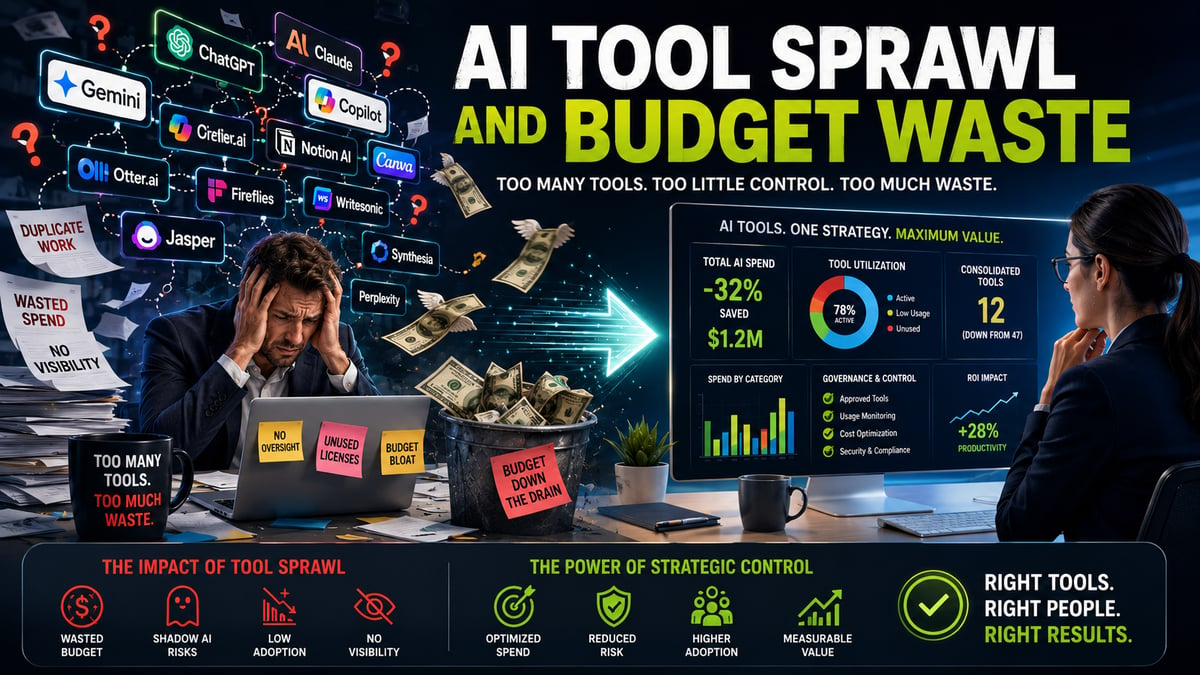

Most enterprises pay for more artificial intelligence (AI) tools than they realize. Approved tools, shadow subscriptions, embedded features, and underused seats stay in the budget after value disappears.
Key Takeaways
- Larridin’s State of Enterprise AI 2026 research found the average enterprise uses 23 different AI tools, but only 38% maintain a complete inventory of what’s actually running.
- Intuit found 73% of senior US business and finance leaders agree that consolidating the tech stack and reducing tool sprawl is the fastest path to a healthier bottom line.
- AI tools that haven’t been inventoried can’t be rationalized. Discovery must come before any consolidation or budget-cutting conversation.
The Sprawl No One Planned
AI tool sprawl didn’t happen because one leader made a bad strategy call. It happened one team at a time. Marketing found a writing tool, engineering added a coding assistant, and finance tested an analysis tool.
Each decision made sense in isolation. Together, they create an AI stack that no one fully owns: approved tools, team-level subscriptions, embedded features, and tools finance only finds out about after they receive an invoice or expense report.
That is where AI tool sprawl becomes a budget problem. Leaders aren’t just paying for too many tools. They’re making renewal, consolidation, and cut decisions without a complete view of what’s used, who uses it, and what value it produces.
Where the Waste Lives
1. Redundant Capabilities Across Multiple Tools
The most common pattern in Larridin client audits is three or four teams paying for different tools that do nearly the same job. Each subscription looks reasonable alone. Together, they create avoidable spend with no clear difference in outcomes.
2. Licensed Tools With Low Actual Utilization
Buying 500 Copilot seats doesn’t mean 500 employees are using it productively. In many enterprises, a meaningful share of licensed AI seats are rarely used or only used at a basic level. The AI Adoption dashboard measures actual utilization at the team and role level, not just whether someone logged in once.
3. Shadow AI Subscriptions Outside Any Budget
Teams solving real business problems often find AI tools faster than procurement can evaluate them. Those tools are charged to corporate cards or added to expense reports, creating spend IT never sees. In Larridin audits, we regularly find departments running tools finance has paid for but IT has never evaluated. That’s where shadow AI becomes a budget issue in addition to a security issue.
4. Embedded AI Features No One Evaluated
AI features are now built into software that enterprises already use. Some are included in existing contracts. Others trigger add-on costs, usage-based charges, or new renewal conversations. If finance and IT only review standalone AI tools, they miss the AI spend hiding inside approved platforms.
Why Standard Software Audits Don’t Work for AI
Traditional software audits look at license records and login logs. That misses too much of the enterprise AI footprint. Browser-based tools, embedded AI features, usage-based pricing, and agent workflows don’t always create the same records as installed software or seat licenses. Getting an accurate inventory requires automated discovery through the Workflow Intelligence platform, not just a query of the license management system.
What Tool Rationalization Actually Requires
AI tool rationalization isn’t spreadsheet cleanup. It needs evidence from four places:
- A complete inventory of every AI tool in use, including shadow AI, embedded features, and tools owned by individual teams
- Actual utilization at the team and role level, not just seat counts
- AI Fluency data that shows whether a tool is underperforming because employees need support or because the tool is a bad fit
- AI Impact data that connects each tool to measurable business outcomes
That last distinction matters. Cutting a tool because utilization is low can save money in the short term, but it can also remove a tool that would have produced value if the real problem was proficiency. Without measurement, leaders can cut the wrong thing and recreate the same gap with whatever replaces it.
Frequently Asked Questions
How many AI tools does the average enterprise use?
Larridin’s State of Enterprise AI 2026 research found an average of 23 different AI tools per enterprise. Only 38% maintain a complete inventory of what’s actually running.
How do we build a complete AI tool inventory?
Start with automated discovery that captures browser telemetry, desktop activity, API calls, and application usage. Self-reported inventories are usually incomplete because shadow AI is, by definition, not being reported to IT.
What is the difference between utilization and license count for AI tools?
License count tells you how many seats were purchased. Utilization tells you how many people are actually using the tool, how often, and at what depth. The gap between those numbers is where AI tool sprawl costs accumulate.
How do we decide which AI tools to cut during a budget review?
Use actual utilization, measured proficiency, and connected outcomes. Low utilization might mean the tool should be cut, or it might mean employees need better training. High utilization with low outcomes is a different problem. The point is to know which issue you‘re solving before you remove the tool.
Build Your AI Tool Inventory Before the Next Budget Cycle
Going into an AI budget review without a complete tool inventory means making cut decisions from partial evidence. Larridin shows every AI tool, who’s using it, how often it is used, and what value it produces, so leaders can rationalize the stack without guessing.
Book a discovery call to start building your AI tool inventory.