


The Problem: How Companies Measure AI Adoption Today
How do companies measure AI adoption? "Poorly" is the short, if snarky, answer. (Unless you're at one of the growing number of organizations that use Larridin to measure AI adoption and optimize return on AI investment, in which case, you're no doubt doing pretty well on this front.)
Some organizations have no controls; others pre-emptively crack down on AI use, preventing experimentation. (Larridin’s Ameya Kanitkar discussed best practices in a recent InformationWeek podcast.)
All too many companies measure AI adoption prescriptively, from the top down:
- Start with an enterprise-wide dictate to "use more AI."
- Negotiate enterprise licenses with foundation model and LLM-powered tool companies.
- Guesstimate the number of seats to pay for based on employee headcounts per department.
- Pay for licenses each month.
- Declare the license count to be the measure of employee adoption.
Why License-Based Measurement Fails
Unfortunately, this misses several important factors that render such estimates nearly useless:
- Non-use of licenses. Many expensive per-seat licenses go largely or entirely unused.
- Differences in license use. According to the 2026 State of Enterprise AI Report from Larridin, only about 5% of employees save more than 20 hours a month from AI. Most save fewer than three hours/week.
- Personal license use. The same report shows that nearly 50% of AI in use is procured outside designated channels, often using some combination of personal log-ins and product versions with end user license agreements (EULAs) that have permissive data sharing policies.
The Data: What High-Performing Companies Do Differently
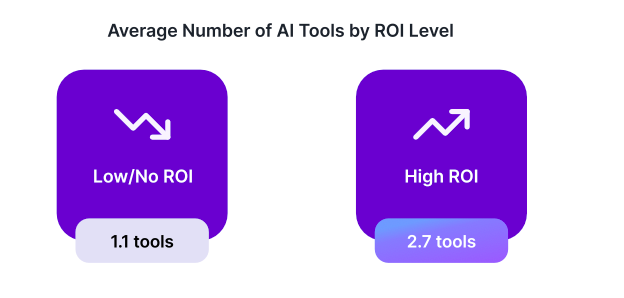
One of the key findings of our Report is shown in Figure 1: companies with a high expectation of achieving positive ROI from AI use nearly three AI-powered tools per seat, vs. a single tool at companies with low expectations. Most companies have no way to measure what AI-powered software is in use, sanctioned and unsanctioned, so they have no way of knowing this metric.
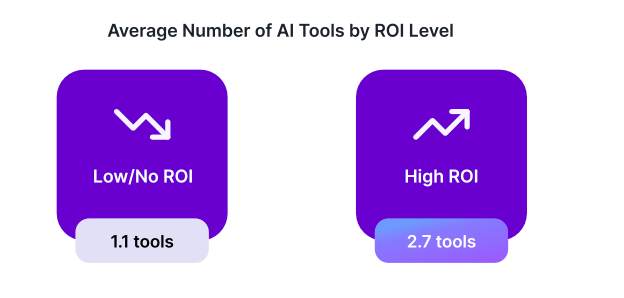
Figure 1. Companies that expect to achieve positive ROI with AI
use nearly three times as many AI-powered tools as those that don't.
(Source: Larridin 2026 State of Enterprise AI Report.)
What Effective AI Adoption Measurement Looks Like
No organization is in business for the purpose of buying and managing AI software licenses. AI adoption can only be carried out and measured effectively when usage is monitored and reported on; when employee fluency with AI is tracked and encouraged; and when the impact of AI usage on company goals such as ROI is tracked, measured, and progressively increased.
Further Reading
Larridin has several resources you can use for this purpose. On our blog:
- Accelerating Responsible AI Adoption describes how to make AI adoption move faster.
- AI Adoption in the Enterprise: What It Is, How to Measure It, and ... goes into more detail, defining relevant terms and spelling out steps to follow.
We also have a Guide and a Workbook that show how it's done:
- AI Adoption: The Complete Enterprise Guide (2026)
- AI Adoption: The Complete Enterprise Workbook (2026)
But our ultimate resource for helping you measure AI adoption is the Larridin platform. It's designed to support the entire process of AI adoption, fluency, and impact, from start to finish.
Larridin gives enterprises complete visibility into their AI tool landscape — sanctioned and unsanctioned — with browser-level monitoring, real-time data protection, and governance analytics segmented by team, department, and risk level. If your organization cannot confidently answer “what AI tools are in use and how is data protected?” — Larridin closes that gap.
Learn how Larridin measures AI adoption
Measuring adoption starts with understanding the workflows AI is changing. Our AI Workflow Mapping helps teams connect usage data to real business processes.