
Enterprise AI Measurement Guide
AI Governance · AI Tool Compliance
Unapproved AI Tool Usage Rate
Which departments have the highest rates of unapproved AI tool usage, and how do we prioritize governance intervention based on where the risk is actually concentrated?
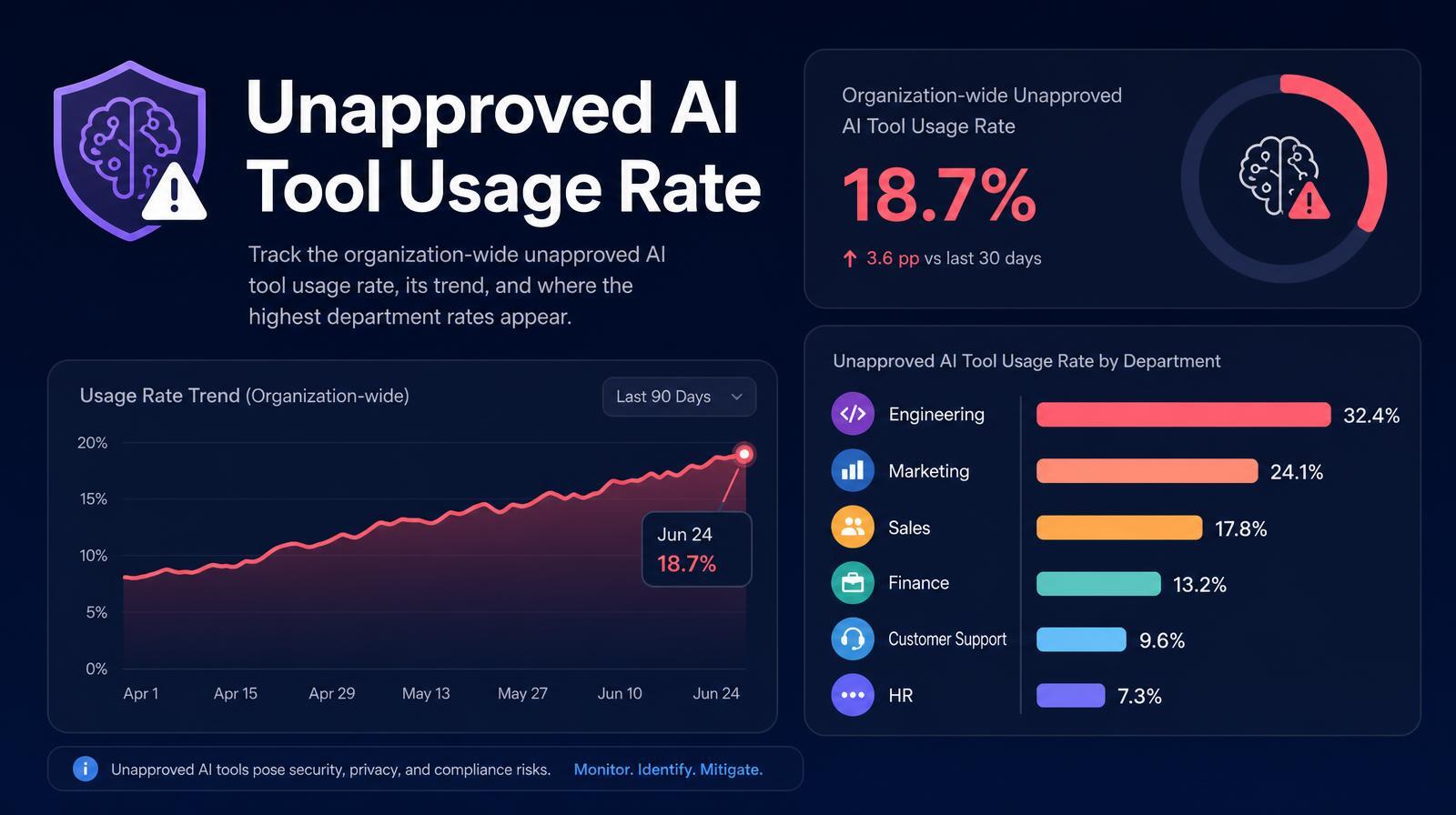
What it shows
The Unapproved AI Tool Usage Rate is the primary compliance metric in Larridin's governance view. It shows what percentage of all AI tool interactions in the organization are happening on unapproved tools, with a trend line and a department-level breakdown that surfaces which functions have the highest non-compliant usage rates. The "Highest by Department" breakdown identifies where shadow AI is most operationally embedded.
Why it matters
The company-wide rate is the headline. The department breakdown is where governance decisions actually get made. An org with a 5.9% company-wide rate that looks healthy might have one department sitting at 100%. That means every AI interaction in that function is on an unapproved tool. The rate also distinguishes between real shadow risk (employees using tools the org has never evaluated) and classification quirks (desktop versions of approved tools getting flagged as unapproved because they sit outside the license tracker).
The Larridin angle
Larridin's department-level breakdown of the usage rate, combined with the trend, answers the governance question boards are now asking: is shadow AI concentrated or distributed, and is it getting better or worse over time? Those two dimensions together determine whether a policy response is needed immediately or can be addressed systematically.
Related AI Governance Metrics
Common questions
How does the Unapproved AI Tool Usage Rate help in governance decisions?
The Unapproved AI Tool Usage Rate provides a company-wide view of unapproved AI tool use, highlighting trends and department-specific rates, which helps governance teams identify where shadow AI is most concentrated and whether immediate policy responses are necessary.
Why is it important to look at the department-level breakdown of AI tool usage?
The department-level breakdown is crucial because it reveals significant variations in unapproved AI tool usage that a company-wide rate might mask, allowing leaders to pinpoint specific functions where non-compliance is most prevalent.
What should be done if a department shows a high rate of unapproved AI tool usage?
If a department shows a high rate, review the Top Unapproved AI Tools and the Shadow Stack Table for additional context to understand what might be driving this pattern before deciding on appropriate governance actions.
How should changes in the trend of unapproved AI tool usage be interpreted?
Changes in the trend should be compared with Policy Enforcement and other governance metrics to determine whether they result from specific policies, tools, or interventions, ensuring that the response is accurately aligned with the underlying causes.