

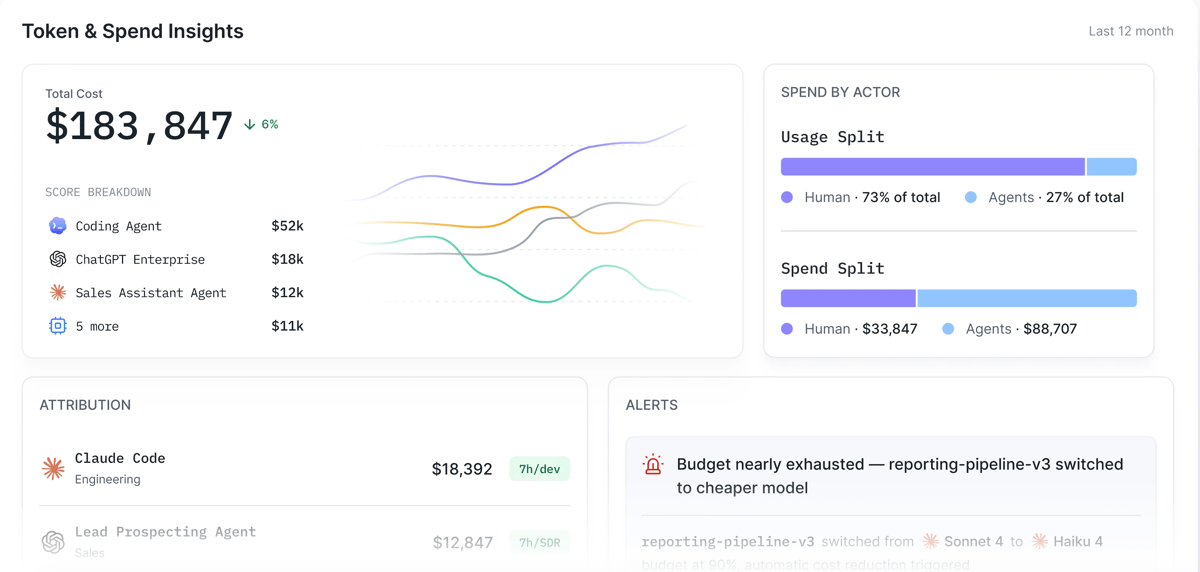

Enterprise AI spend is up 13X over the last twelve months, and still accelerating. How to properly track, allocate and budget AI is an enormous challenge, and tying those expenditures to specific projects, use cases, and outcomes will be one of the biggest questions all boards and management teams have to answer in the coming years.
But Finance and IT organizations today have no reliable way to see how much money is being spent and where it is being spent—by department, by agent, by vendor, or by model. Finally, and most importantly, organizations need to allocate AI spend to use cases within each department.
Today, Larridin is launching the first and only Token Spend & Insights product to answer all of these burning questions, and more. Larridin gives the enterprise a consolidated view of every dollar spent, with an attribution layer that connects spending to the teams, agents, workflows, and decisions that drive it.
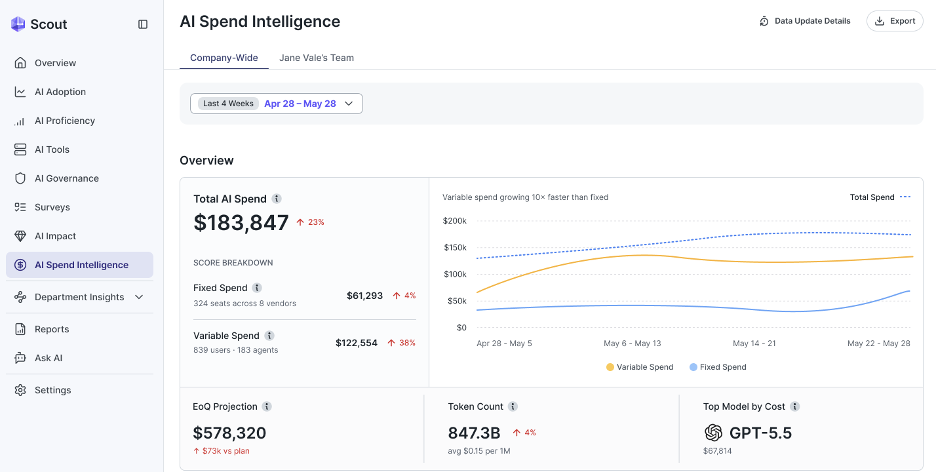
What We Built
All AI Spend Sources Consolidated
Token Spend & Insights pulls every source of AI spend into one place, ingesting data from Bedrock, GCP, OpenAI, Codex, Cursor, Claude, LLM Gateways, employee-built agents, desktop apps such as Cowork, and invoices stored as CSV files, across every format.
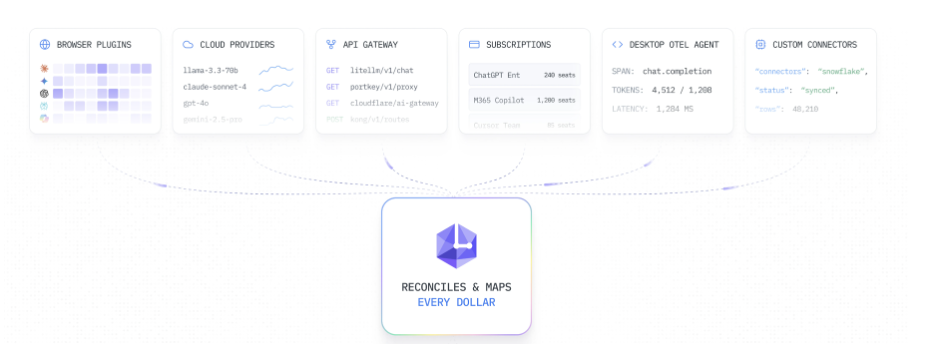
Observed Token Usage & Billed AI Spend Tracking
Most organizations have already made significant AI investments. Larridin makes sure these investments are actually being used, by surfacing spend patterns and helping teams make full use of tools that have been approved and paid for.
Because of various subsidies and credits from model providers, it is important for business leaders to understand true token usage for long-term planning of AI spend management. Larridin gives you full visibility into both:
- Observed token usage: Required for proper long-term planning. True token usage is often buried within API/Gateway invoices that obscure the specific models used, as well as token and usage data. Larridin brings full visibility into token use. This is the true eventual cost your business would bear when subsidies disappear. In addition, this data can be further used for cost optimization. For example, knowing that $2000 was spent on Claude usage may or may not be directly useful. However, knowing $2000 was spent on Anthropic’s cost-efficient haiku model is actionable, since you can potentially replace haiku with a Gemini Flash model that’s three times cheaper.
- Billed AI spend after credits and subsidies: This is often necessary for proper accounting and proper cost hygiene.
Real Attribution
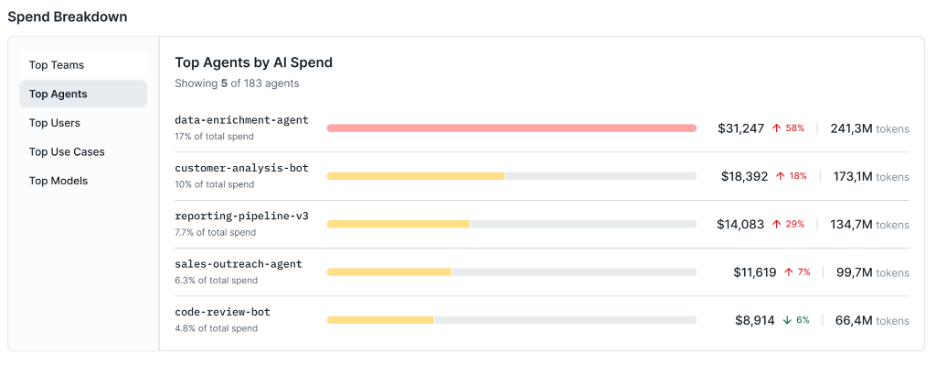
Once consolidated, every token and dollar gets attributed back to the department, team, agents, and project, allowing real planning, forecasting and ROI analysis for every AI initiative and each choice of AI model.
Alerting & Projections
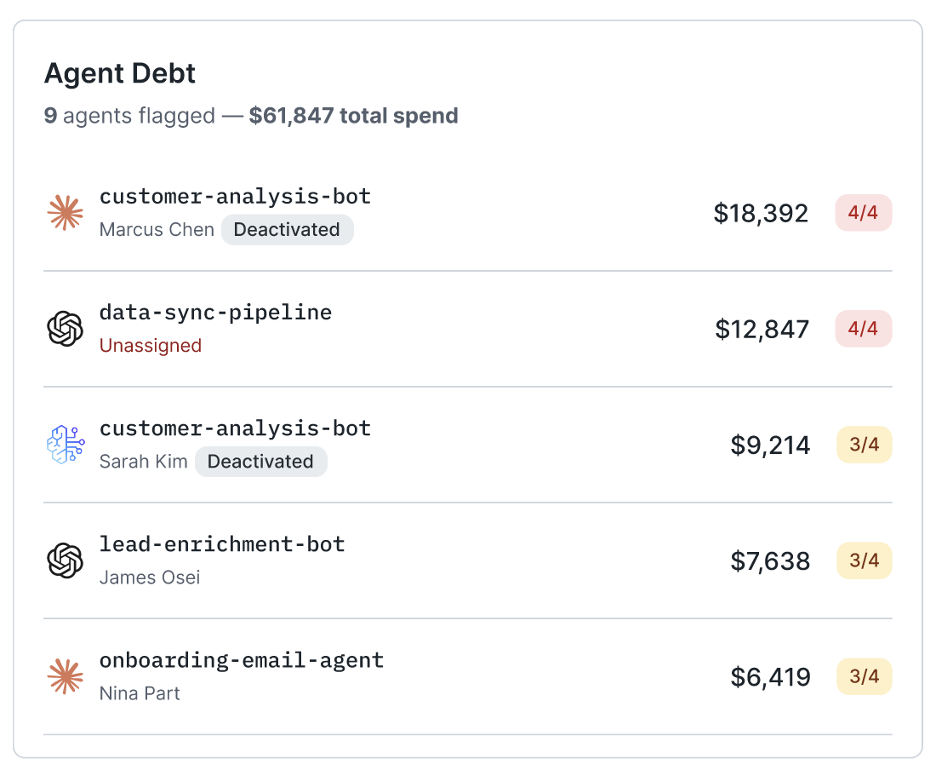
Alerts fire before budgets are breached, surfacing agent debt, projected overages, and dormant seats that are quietly burning money.
What comes next
Gaining visibility and attribution into your AI and agent expenditures is only the first milestone. The real challenge lies in connecting those financial data points directly to business outcomes.
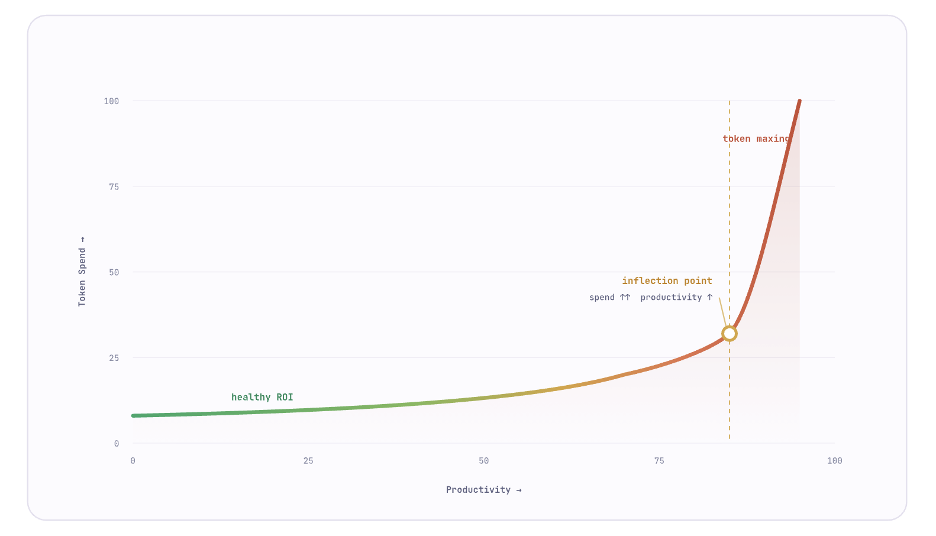
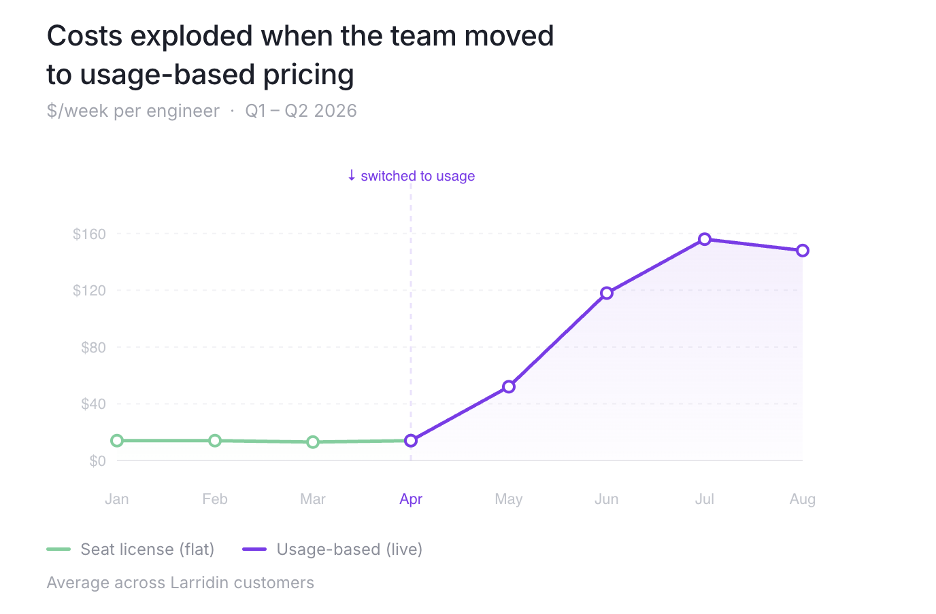
Typical AI spending, as shown in the figure, is only effective up to less than half of total spend. After that, costs rise much faster than productive results. Using Larridin Token Spend & Insights, you can put guardrails around the inflection point of decreasing cost-effectiveness, making it practical to scale AI usage against measured productivity gains.
By building native integrations into enterprise systems of record, we aim to answer a fundamental question: What is the true business impact and ROI of your AI spend?
With this granular, outcome-mapped data, enterprises will have the clarity needed to strategically scale high-performing AI investments and confidently reduce spend on initiatives that are not delivering results.
Learn more here or contact us to speak with our team.
Further reading: