

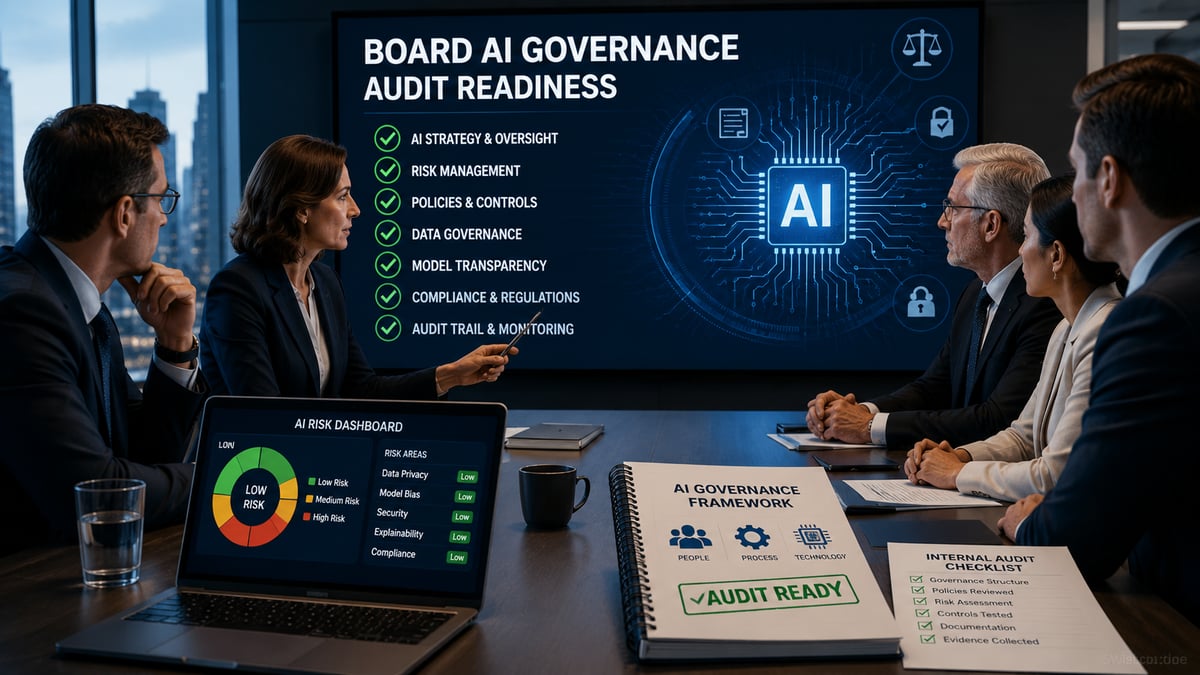

Boards are asking more specific questions about artificial intelligence (AI), and most executive teams don’t have specific answers. That gap is closing fast.
Key Takeaways
- Only 22% of executives are highly confident they could pass an independent AI governance audit within 90 days, according to Grant Thornton’s 2026 AI Impact Survey.
- Board-level AI scrutiny is rising, but most organizations still lack the inventory, spend attribution, proficiency data, and controls needed to answer basic governance questions.
- You can’t pass an enterprise AI governance audit for tools you haven’t found yet. Discovery comes before compliance.
Why Boards Are Asking Now
Board scrutiny is increasing quickly. Freshfields found an 84% increase in S&P 500 companies disclosing board oversight of AI or board-level AI competency over the past year. The reason is straightforward: AI is no longer a technology experiment. It’s a core operating function with material financial and reputational exposure.
If your board asked what AI is running in your organization, who is using it, what it costs, and what you’re getting back, what would you say?
The Four Things Auditors Want to See
1. A Complete AI Inventory
This means every tool in use, not just the ones IT approved. Larridin’s State of Enterprise AI 2026 research found that 67% of enterprises lack complete visibility into the AI tools their employees are using. You can’t audit what you haven’t found.
2. Usage and Spend Attribution
Who is using each tool, how often, and what is it costing? Boards want to see that spend connects to teams, use cases, and outcomes. The AI Adoption dashboard and Token Spend & Insights together provide that layer.
3. Evidence of Proficiency and Value
Are the tools working? Auditors increasingly want evidence that AI is delivering expected outcomes, not just that employees have access to it. That evidence comes from the AI Impact platform connecting usage to business outcomes.
4. Ongoing Controls, Not One-Time Documentation
A policy document isn’t an AI governance framework. Boards want continuous monitoring, policy enforcement, and the ability to surface new tools as they appear, not a PDF that was created a year ago and has never been updated.
Why Most Organizations Are Not Ready
The AI governance gap comes from how most organizations built their AI strategy. They deployed tools first, measured AI adoption second, and thought about governance third, if at all. The result is incomplete inventories, fragmented spend visibility, no proficiency data, and policies that are documented but not enforced. None of this is insurmountable, but it requires building the measurement foundation first. See our CIO guide to AI monitoring for a practical starting point.
What a Governance-Ready State Looks Like
Larridin clients typically have their first complete AI picture within days of deployment. A governance-ready organization can show:
- A real-time inventory of every AI tool in use, including shadow AI, across every team and department
- Total AI spend attributed by tool, team, use case, and outcome
- AI proficiency data by role and function, available through AI Fluency measurement
- Policy controls that enforce governance standards on browser and desktop AI use without requiring content monitoring
- A continuous audit trail that updates as new tools appear or usage patterns shift
Frequently Asked Questions
What does an AI governance audit actually review?
An AI governance audit examines whether an organization can account for the AI tools it uses, the costs associated with them, the proficiency of users, the business value produced, and the controls in place to manage risk. The strongest audits look for continuous monitoring rather than point-in-time documentation.
How long does it take to prepare for an AI governance audit?
Organizations starting from scratch typically need 30 to 60 days to build a complete picture. Larridin clients deploy in days and have their first full AI inventory within a week of launch, which significantly compresses the preparation timeline.
What is shadow AI and why does it matter for governance?
Shadow AI is any AI tool an employee uses without IT or procurement approval. It matters for governance because it creates accountability gaps: spend that doesn’t appear in budgets, data handling that may not meet security standards, and tools that won’t show up in an audit unless active discovery is in place.
Who is responsible for AI governance at the executive level?
Responsibility is increasingly shared across the chief information officer (CIO), chief information security officer (CISO), chief financial officer (CFO), and, in some organizations, a dedicated head of AI governance. What makes governance work is not which title owns it, but whether every leader is working from the same real-time picture.
Start Building Your Governance Foundation
The board questions are coming. The question is whether you’ll have the answers ready. Larridin gives you the discovery, measurement, and audit trail that turns AI governance from a gap into a competitive asset.
Book a discovery call to see what your AI landscape actually looks like.