


Your organization collects AI usage data. Can you turn it into insights to make smarter decisions?
Key Takeaway
According to the Larridin State of Enterprise AI Report, 88% of leaders believe AI measurement determines market winners. AI analytics insights transform raw datasets into data-driven decisions through real-time data analysis, predictive analytics, and data visualization. Organizations can use AI-powered analytics to streamline workflows, optimize business outcomes, and enable AI agents to create measurable business value.
Quick Navigation
- Why Traditional Analytics Falls Short
- Core Components of AI Analytics Solutions
- Turning Analytics Into Actionable Insights
- Key Metrics for AI Enablement
- Building Your AI Analytics Stack
- From Insights to Enablement
Key Terms
- AI Analytics: Application of artificial intelligence and machine learning to data analysis, automating insights discovery from datasets.
- Predictive Analytics: Using historical data and machine learning algorithms to forecast future outcomes and trends.
- Data Insights: Actionable conclusions drawn from data analysis that inform business decisions and drive strategy.
- AI-Powered Analytics: Analytics platforms using AI models, LLMs, and deep learning to automate data preparation and analysis.
- Real-Time Data: Information processed and analyzed instantly, enabling immediate decision-making and response.
Why Traditional Analytics Falls Short
Traditional analytics relies on spreadsheets, manual data preparation, and historical data analysis. Data analysts spend weeks running SQL queries against data warehouses to produce reports business users receive too late for timely decision-making.
AI analytics tools change this. Using machine learning and natural language processing (NLP), AI-powered analytics platforms automate data analysis from multiple data sources. Generative AI and GenAI capabilities help data scientists and business users discover correlations in unstructured data that traditional analytics miss.
According to Larridin research, organizations with AI analytics discover 3-5x more AI usage than expected once they start measuring across their AI stack. Real-time analytics reveal patterns invisible in static reports.
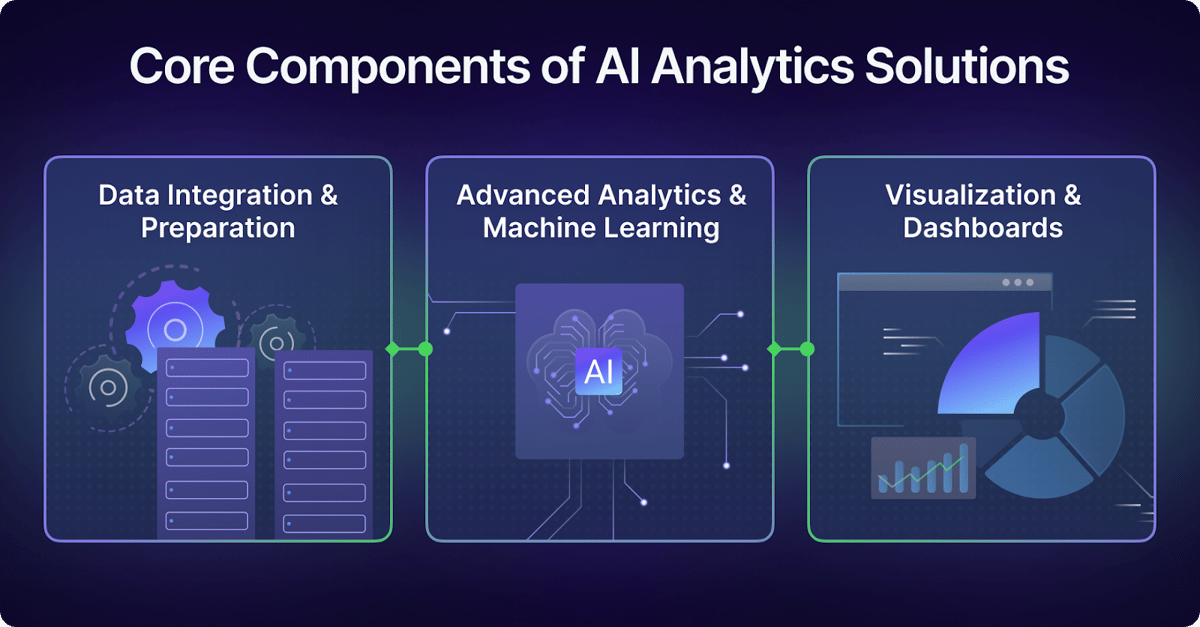
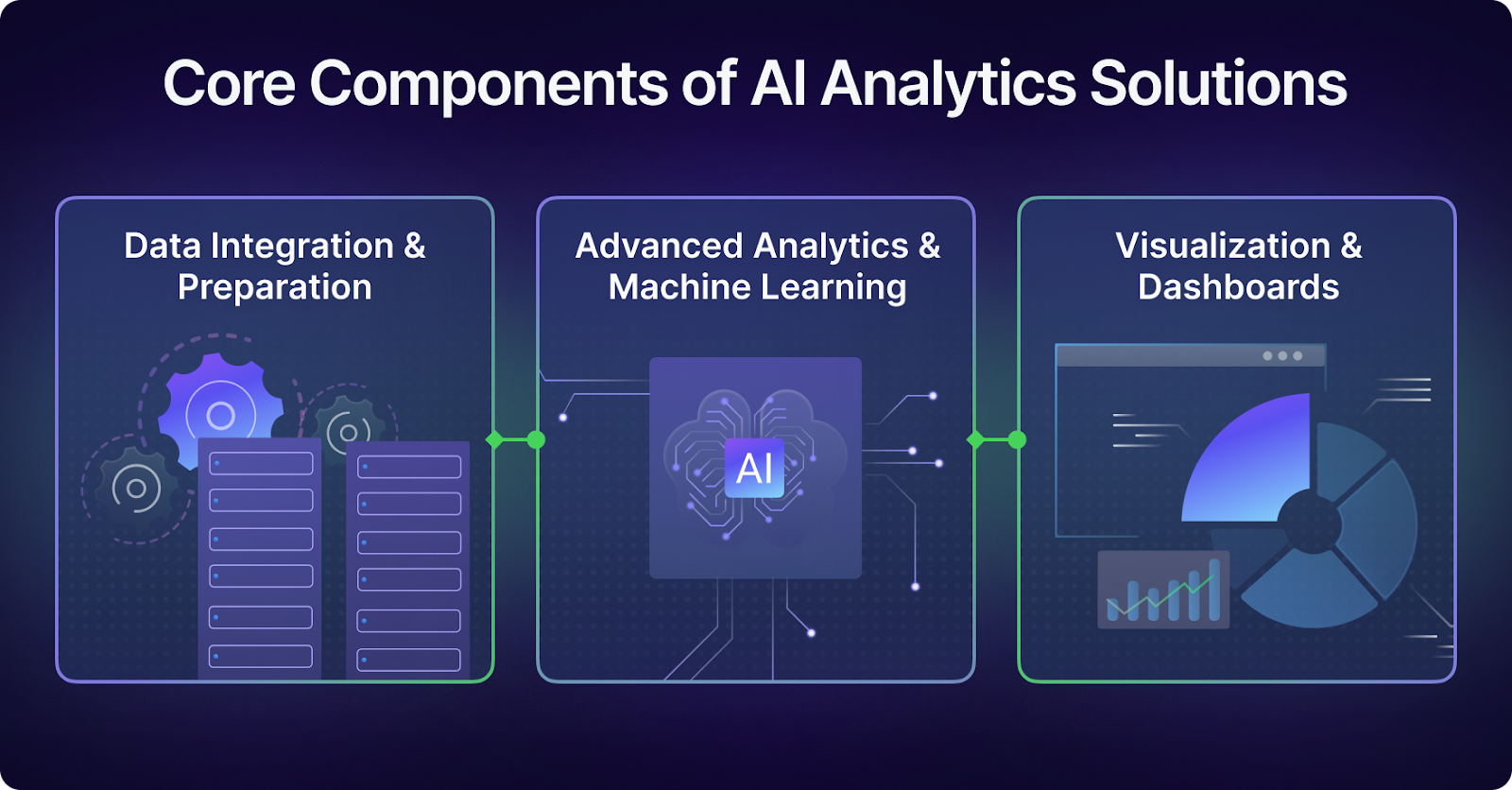
Core Components of AI Analytics Solutions
Data Integration and Preparation
Modern analytics solutions connect to data sources through APIs and pull in data from SaaS applications, supply chain systems, healthcare records, and enterprise databases. AI-powered automation handles data preparation, cleaning datasets and transforming unstructured data into analysis-ready formats.
Advanced Analytics and Machine Learning
AI analytics platforms apply deep learning algorithms and neural networks to identify patterns. Predictive models forecast trends, while predictive analytics help optimize workflows. Natural language processing allows business users to query data using plain language rather than SQL.
Visualization and Dashboards
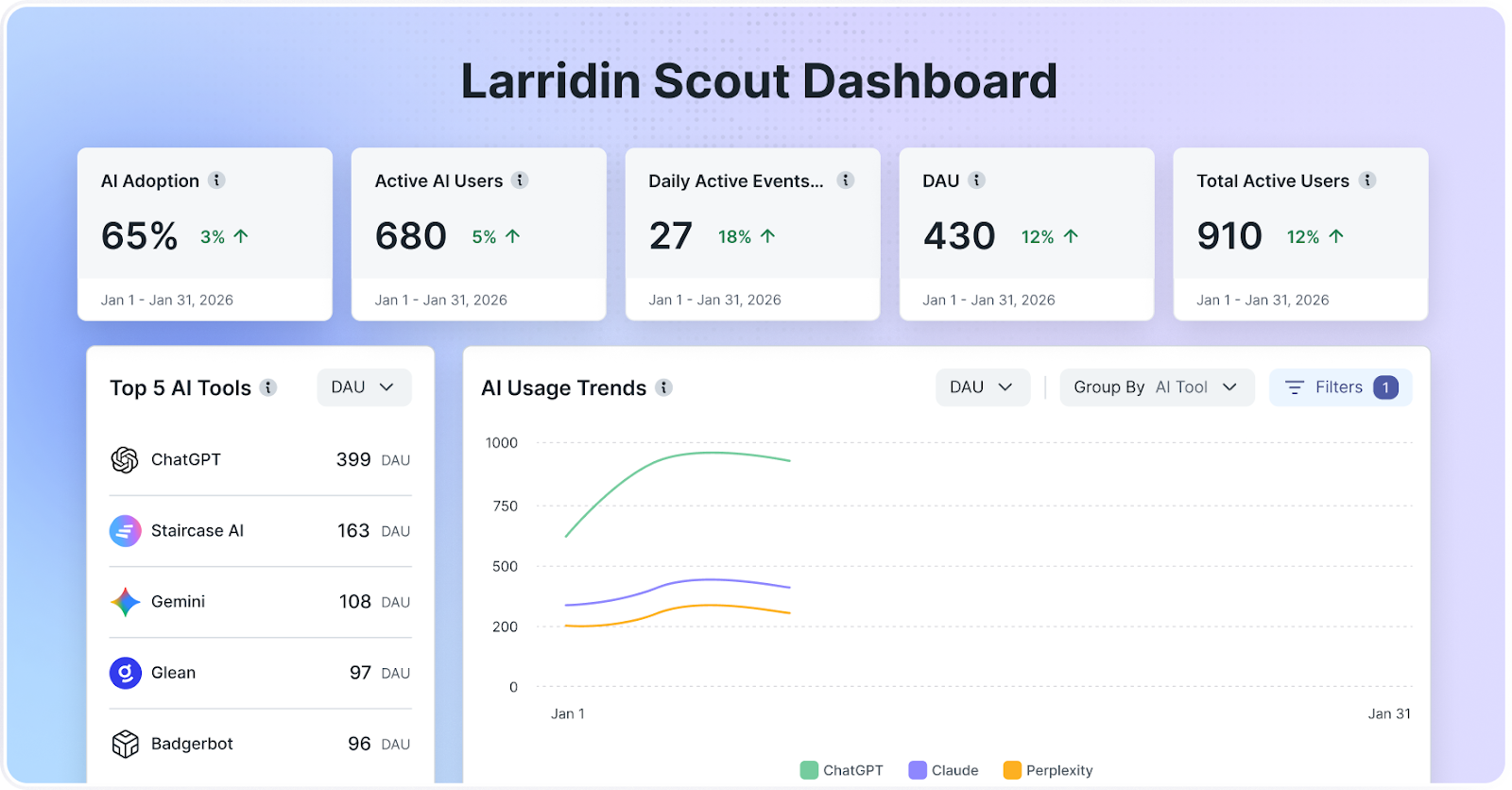
Data visualization transforms complex data analysis into dashboards business users understand. Real-time dashboards display KPIs showing AI adoption, usage patterns, and business outcomes. Interactive functionality lets data analysts drill into specific use cases and correlations.
Turning Analytics Into Actionable Insights
Data insights only create value when they drive action. Transform analytics into enablement through systematic processes.
Identify High-Impact Use Cases
Use AI analytics to pinpoint where AI tools deliver the most business value. Track metrics showing which teams achieve highest productivity gains, which AI agents solve real problems, and where automation streamlines processes most effectively. Focus enablement on proven use cases.
Optimize Based on Real-Time Data
Real-time analytics enable immediate optimization. Monitor AI-powered workflows, identify bottlenecks, and adjust before issues impact customer experiences. Predictive models forecast demand, helping healthcare providers optimize staffing or supply chain teams prepare for disruptions.
Enable Smarter Decisions Across Teams
Democratize data insights. Business intelligence tools let business users access analytics without waiting for data scientists. Natural language processing through LLMs lets teams run queries like "show AI adoption by department" without knowing SQL or understanding the data warehouse structure.
Key Metrics for AI Enablement
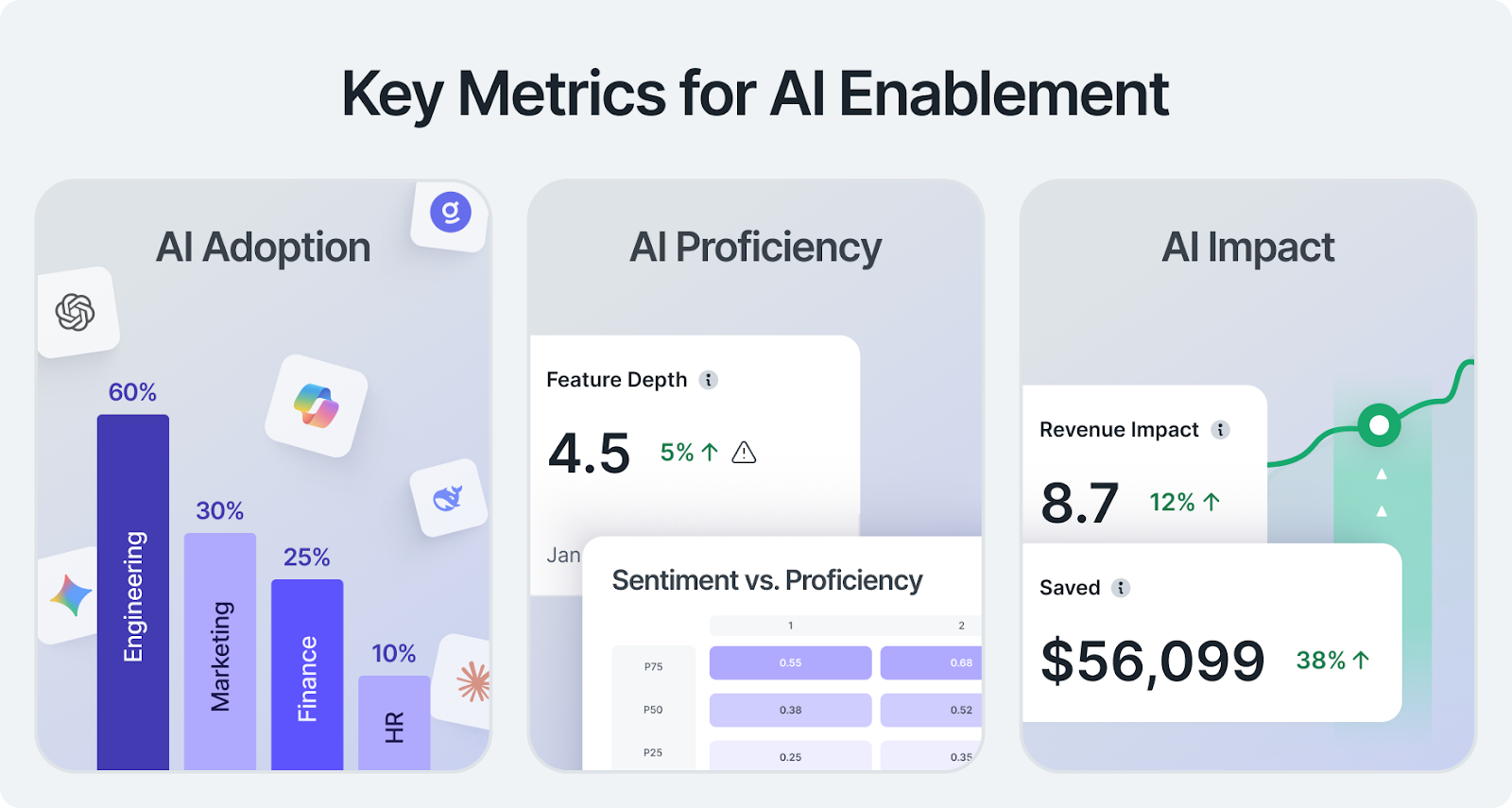
Track metrics that connect AI analytics to business outcomes. Monitor AI tool adoption rates, including showing who uses AI effectively, how often teams use it, and proficiency metrics that show how effectively they apply it.
Measure business impact through operational efficiency gains, cost reduction from automation, revenue improvements from AI-driven decisions, and customer experience enhancements. Use predictive analytics to forecast trends and adjust strategy proactively.
Analytics platforms should track these KPIs in real-time dashboards that decision makers can view at any time. According to Larridin, organizations that make data-driven decisions about AI investments scale successful practices faster and prove ROI to stakeholders.
Building Your AI Analytics Stack
Effective AI analytics requires the right technology foundation. Start by selecting an analytics platform with functionality supporting your use cases. Look for providers that offer real-time data intake, machine learning capabilities, and business intelligence features.
Ensure the platform integrates with existing data sources through APIs and supports both structured data from databases and unstructured data from documents.
Invest in data science capabilities. While AI-powered analytics automate a lot of the analysis, data scientists and data analysts are essential for building predictive models, validating algorithms, and interpreting complex correlations. Train business users on analytics tools and data visualization so insights reach decision-makers who can act.
From Insights to Enablement
AI analytics insights help organizations move from guessing to knowing. Real-time analytics show exactly how AI tools get used. Predictive analytics forecast where to invest. Data-driven decisions replace assumptions with evidence.
Organizations that use advanced analytics can identify power users, scale successful AI practices, optimize workflows based on actual usage patterns, and prove business value from artificial intelligence investments. They streamline enablement by focusing resources where data shows the highest impact.
Start building your AI analytics capability today. Connect data sources, implement analytics solutions with machine learning and predictive analytics, create dashboards showing KPIs that matter, and use data insights to guide enablement strategy. The organizations that turn analytics into action will be the ones that optimize AI for competitive advantage.